Europe and its institutions are facing challenges
12 proposals for debate

The European Union is at a critical juncture. This is particularly true of its civil service.
Firstly, we are witnessing mounting political, economic and military tensions between the major geopolitical blocs. In the context of the globalised economy, such a configuration threatens us all.
These tensions transcend the previously established institutional framework designed to regulate the various dimensions of globalisation, paving the way for the brutalisation of international relations. This development runs counter to the paradigm that has underpinned the European Union.
Added to this is the proliferation of open and covert armed conflicts in Eastern Europe, the Middle East, the South China Sea, Southeast Asia, and Central Africa. These conflicts, which are an expression of rivalry between blocs, are reviving the arms race. In the current budgetary context, this is pushing the financing of social needs, as well as initiatives related to fighting climate change and transitioning to a green economy, into the background.
The rise of obscurantist forces, which often have theocratic and anti-European connotations, has not spared the European Union. For the moment, however, it has been spared the most extreme forms.
Public debate itself has become blocked and illegible, with different positions feeding off alternative facts, assertive certainties and fake news. This is no longer just the work of marginal political forces. Some of the established elite, backed by powerful economic forces, are also increasingly challenging the rules of public debate.
The debates on the future financing plan for the European Union are currently taking place in this context. The Commission has contributed to the drafting of reports such as the Draghi Report, which sets out a realistic and considered approach. However, the Commission did not consider that it had the necessary political power or support from European political parties to fully integrate them into its budget proposals.
As we know, the Commission has proposed a budget of €2 trillion, of which €1.75 trillion is available. This is equivalent to the current budget amount plus the budget allocation for the recovery plan.
In short, while this €2 trillion may appear to be an increase, it actually reflects budgetary stagnation. So how can we finance defence spending, for example, or begin to repay the sums borrowed for the previous recovery plan? And how can we maintain or even increase the actions taken to combat climate change?
There is also a risk that Member States will cut this budget, given the lacklustre initial reactions.
Without the Union’s own resources, this budget will not allow us to meet the European Union’s new needs. This weakness will only fuel criticism that discredits the European project, giving rise to the false belief that the EU is too weak to respond to the threats we face.
Reform of the Staff Regulations is not currently on the agenda, but budgetary constraints are likely to lead us there in the long term. Furthermore, even if the Staff Regulations remain unchanged, many regressive measures could be imposed on staff.
While staff are struggling to make their voices heard on this issue, we want to reaffirm that the high-level group reflecting on the evolution of the European civil service must first identify the real challenges and develop a clear understanding of the civil service’s role.
Admittedly, the group must address issues such as careers and career management, recruitment, staff management, implementing flexible and ‘agile’ working methods, managing resources smoothly, and using artificial intelligence (AI). Within a limited budgetary framework, all of this must serve to take on the new missions of the institutions and establish the EU as a relevant player in protecting citizens and their model of society based on solidarity, both within and outside the Union’s borders, as well as improving productivity.
In truth, the European Union is probably the most effective response to the current drift of the world. To fulfil our mission, we can only rely on our own strengths. To achieve this, the institution must empower its staff to do better.
However, the high-level group seems to want to pursue this reflection without properly organising the contribution of its staff and their representatives, except through simple information sessions. This is a mistake. Staff involvement in this process is essential if they are to contribute their expertise. Together with the other trade unions, U4U is campaigning for this. It is not too late to do the right thing.
In order to do so, proposals must be put forward. So far, U4U has identified several proposals, which have been grouped into 12 themes. These will be discussed with staff, in the inter-union group and within the high-level group. As they do not involve any changes to the European civil service statute, our ideas can be implemented without delay, which we are firmly opposed to in the current political and budgetary context.
1. The European institutions operate under a variety of different employment contracts. Currently, officials, temporary staff and contract staff perform identical or similar tasks with the same level of responsibility. These numerous types of employment contract have emerged as a result of reform processes over the years. It could be useful to consider whether a specific type of employment relationship should be linked to a particular type of post. For example, decision-makers, law enforcement officers, investigators, border guards and diplomats should be civil servants who are recruited for life. Experts who assist the EU in meeting temporary needs could have an employment contract or be seconded by the national administration. The choice of employment relationship for a given function should not depend on the budgetary situation of a specific administration; rather, it should be decided centrally and consistently across all institutions and agencies. However, measures should be put in place to facilitate the integration of contract and temporary staff.
2. This also gives rise to a second challenge: improving and diversifying the recruitment process. We must continue to speed up and modernise the recruitment process through open competitions. However, we cannot rely solely on external competitions for recruitment. At the same time, depending on the required skills and available positions, we must update and diversify recruitment to make it more modern. The institution does not pay enough attention to the expectations of those recruited, whose needs are not adequately considered. Consequently, some of the available workforce, often the most qualified individuals, are not attracted to the jobs that the institution can offer. Similarly, the value, meaning and careers available in the European civil service are not promoted sufficiently prior to recruitment.
3. The third challenge relates to inducting staff after they have been recruited. A simple, restrictive procedure is not enough. If we want staff to be mobile and agile during their first two years, it is crucial to provide in-depth training, including training in the institution’s culture and its European and democratic values, which must be shared. Career paths in two or three different departments, for example, must better reflect who we are and how we work.
4. Horizontal working must be prioritised. We must collaborate across departments before decisions are made, not at the end of the process. To consider issues in all their multidimensional complexity, we must have the necessary skills. We must move towards less vertical administrative structures from a thematic perspective. We must transition from an interdepartmental consultation methodology to strategic work in clusters. This strategic unification of planning and implementation must also reflect how the college organises its work.
5. We believe that reducing the number of hierarchical levels is necessary. Work motivation must be based on the intrinsic interest of the work itself. Motivation at work should be based on making full use of one’s skills, rather than pursuing hierarchical positions, as is the case today.
6. The sixth challenge relates to the management of precarious staff, who are vital for the smooth running of services for economic reasons, among others. Precariousness must be managed. If it persists, it must be managed more effectively. Internal competitions must comply with the policy on types of posts.
However, career development must be facilitated. Therefore, contracts must be possible for longer periods — for example, 12 years — with successive contracts for contract and temporary staff. Regular internal competitions for permanent roles must be held, as securing a permanent position in the civil service should always be the ultimate goal. Otherwise, it will not be possible to fully integrate contract and temporary staff. By contrast, after 12 years, most people will be guaranteed the benefits of the Community pension.
7. The integration of AI as a tool intended primarily to replace basic tasks, such as processing medical expense claims or calculating mission expenses, should be discussed further. It should also be considered as a means of supporting staff in improving their skills and the efficiency of their work. The introduction of AI must be subject to monitoring and evaluation throughout the process. Similarly, training and mobility measures must be provided for staff affected by its use.
8. The rise of remote working and artificial intelligence highlights the importance of collaboration and teamwork, both of which must be maintained as they are the foundation of institutional strength.
9. The institution’s objectives must be better defined and achieved through a trust-based approach.
10. Mobility must recognise the skills of those recruited for their technical expertise. Not everyone thrives in a purely managerial role. The institution’s wealth also lies in the specialist skills of certain experts, who must be given the opportunity to develop in their field. Mobility must be planned and prepared, and accompanied by the necessary training for its successful completion.
11. Executive and decentralised agencies must give in-depth consideration to their staff. The Commission must set up and manage common services, such as mediation, anti-harassment measures and disciplinary procedures. Mobility must be organised not only between agencies, but also between institutions. Some of the staff employed must be civil servants. Internal procedures must be established to organise career development. Trade union representation and social dialogue must be organised in a more comprehensive and professional manner.
12. In general, personnel policies that enable career progression and skills development should be standard practice. Staff should be given the opportunity to progress in their careers and develop their skills. Services cannot function if they are made up of ‘immobile’ people.
The above proposals should enable us to engage in an informed dialogue. This dialogue must aim to improve the effectiveness of our administration in the face of the current global challenges. Our European administration must be empowered to speak with the seriousness and expertise that matches the economic and moral weight of the EU and Team Europe on the world stage. Budgetary considerations are only one part — albeit a very important one — of this future debate.
The real objectives of Catherine Day’s High Level Group need to be clarified
The inter-union group responded to an interview with Catherine Day published in Euroactiv, in which she seemed to suggest that only temporary staff should be promoted. These concerns, which may be premature or even unjustified, arise in a context where the announcement of the group’s formation was made without prior dialogue with staff representatives, and with no guarantee of their subsequent involvement. The group was also promoted in reference to similar work carried out 25 years ago, prior to the reforms of 2004 and 2014. The Intersyndicale and the Staff Committee (CCP) have sent several letters requesting the active inclusion of staff representatives, as well as a guarantee that the results of the high-level group will not form the basis of a new reform of the Staff Regulations. However, the Administration refuses to include staff representatives in the working groups, despite promising to consult them at each stage. The various letters exchanged can be viewed below.
Note TO THE ATTENTION OF A. Katsogiannis, CHAIRMAN
OF THE CENTRAL STAFF COMMITTEE
&
Mr Sebastiani, Mr Trujillo Herrera, Ms Valkova, Mr Mavraganis, Mr Vlandas and
Ms Conefrey,
CHAIRPERSONS OF REPRESENTATIVE UNIONS AND STAFF ASSOCIATIONS
Subject: Reply to your note: Large-scale review – Participation of the Central
Staff Committee / Trade unions
By note dated 20 November 2025, you drew my attention to the request of the Central Staff Committee (CSC) and the representative trade unions to participate more actively in the Large-Scale Review (LSR). During the staff event on 21 November, Commissioner Serafin underlined the importance he attaches to staff representation and expressed his appreciation for the constructive role played by elected representatives in the life of the institution. He also reaffirmed his commitment to maintaining an open, continuous and trust-based dialogue, and confirmed his intention to meet with the staff representatives at the beginning of next year, which will be an opportunity for you to share your initial contribution to any, or all, of the large-scale review workstreams. In the same spirit, DG HR has already outlined a practical and constructive framework for the involvement of the CSC during the reflection phase: the invitation to submit written contributions on any or all workstreams and to hold targeted meetings with workstream leads where useful, including to present or discuss these inputs. This approach ensures that your contributions will inform the work of the different workstreams in a structured and meaningful way, while keeping the workstreams focused on their mandate. The LSR is an important internal exercise for the institution. Its purpose is to strengthen the Commission and its capacity to deliver efficiently for European citizens. In this context, I attach great importance to ensuring that staff representatives can make constructive contributions throughout the process, while ensuring that the respective roles and mandates of the different actors are safeguarded.
At this stage, the workstreams remain an internal exercise of the administration. Asking staff representatives to participate in this internal work would create a situation in which they would co-author recommendations which they could subsequently be expected to assess or discuss with the administration, thereby blurring the distinction between the respective roles and phases of the process. Maintaining this distinction and sequencing helps preserve the distinction between the administration and staff representation and ensures that staff representatives can exercise their important role freely and independently with regard to the results of the workstreams. Moreover, when and if the ideas emerging from the LSR mature into concrete proposals taking the form of new general implementing provisions or decisions affecting staff rules or working conditions, the well-established social-dialogue framework will apply in full, including the due involvement of the representative Trade Unions and Staff Associations where foreseen. Be assured that DG HR will continue to work closely with the CSC throughout the process of the LSR and at each step of its development and implementation, as the statutory interlocutor of the administration for matters relating to the organisation and operation of the services.
Electronically signe
Stephen QUEST

01/12/2025
*******
AK/RTR
Note to the attention of
Mr Stephen QUEST, Director-General DG HR
Subject: Large-scale review – Participation of the Central Staff Committee
/ Trade Unions
Dear Mr Quest, The Central Staff Committee (CSC) and the Representative Trade Unions would like to thank you for your presentation in the Central Staff Committee plenary meeting on October 23, 2025, about the Large-Scale Review (LSR). We would like also to thank you for your confirmation that the Staff Regulations are beyond the scope of this exercise and therefore, no matter what the outcome/conclusions of this exercise will be, there will be no request for a reform.
During the presentation it was also mentioned that the inception phase of this exercise included consultation with around 1000 staff members, including (senior) managers, staff and even Junior Professionals. Nevertheless, it never included a proper consultation of the Staff Committee, the committee that according to article 9 of the Staff Regulations represents the staff and can express the opinion of staff. Following this presentation, the CSC received a letter by the LSR team’s chair, Mr. McAleavey that the CCP could “submit written contributions on any – or even all – workstreams” and that the LSR team would “be pleased to facilitate meetings between colleagues designated by the Central Staff Committee and the workstream leaders, where relevant, to discuss your contributions and the progress in the relevant workstreams.”
While we welcome the opening from DG HR’s side with regards to contribution from the CSC and the Trade Unions on the workstreams, at the same time, we regret that the offer by DG-HR is “too little and too late”. We feel that in the frame of this exercise, DG HR doesn’t really want to recognise the statutory role of Staff Committee and that of the trade unions as the most important, not to say the unique, social parties. This is even more discouraging for elected staff representatives as this extremely limited involvement of the staff representatives doesn’t appear to be coherent even with the Commission’s own opinion on social dialogue. Just by a fast reading of the Commission’s Communication on “Strengthening social dialogue in the European Union: harnessing its full potential for managing fair transitions”, one can note the lack of coherence; among other things it is mentioned that “Social partners’ involvement improves policy-making and law-making”, or that “Strong social partners are essential for effective and balanced change management”. In the same spirit, the Council mentions that “the 2 systematic involvement of social partners and other relevant stakeholders is key for the success of economic and employment policy coordination and implementation”.
The LSR is exactly an exercise that aims at identifying areas of improvement, at proposing changes, and at achieving transition to new processes and new ways of operating; hence the request by the Staff Committee and by the Trade Unions to be actively included as an equal partner in this exercise. Our repeated request to be actively involved is also in response to the request by President’s Von der Leyen invitation of September 10, 2025, whose email to all staff concluded: “Finally, I use this opportunity to invite you to engage with the large-scale review of the Commission’s organisation and operations currently underway. Your insights are vital to this work, to shape a Commission able to deliver for Europeans in a rapidly changing world.”
The CSC and Trade union members can have very valuable insights which can be extremely useful if we are given the opportunity to fully participate in the works of the workstreams, in the benchmarking exercise and in the High-Level Group. Asking us just to “share contributions” in a generic manner, without the possibility to present and explain them or to comment on other contributions is simply counter-productive for us. The Staff Committee and the Trade unions have clear roles to play which include a proper and timely consultation, the sharing of documentation, effective dialogue with a genuine eagerness from the side of the administration to discuss, before decisions are taken. If the above-mentioned elements are missing, the staff representatives are hindered from exercising their roles and can in no way be considered as “consulted”.
To address the above issues, the CSC/TUs are proposing the following active participation ways:
- Inclusion of 2 staff representatives in each workstream;
- Participation of 2 staff representatives in the High Level Group as members, or as observers;
- Early sharing with the CSC/Trade unions of the intermediate conclusions of all work streams, due for February 2026;
- Consultation on the preliminary recommendations and the final draft report of the LSR.
The staff representatives would like once again to reiterate their welcoming of making our Organization more modern, more agile and more flexible and our aforementioned proposals aim exclusively to help reaching these goals.
Athanasios KATSOGIANNIS
Central Staff Committee
Cristiano SEBASTIANI / Raul TRUJILLO
Alliance
Marcela VALKOVA
Generation 2004
Nicolas MAVRAGANIS
USF
Georges VLANDAS / Helen CONEFREY
RS-U4U/USHU
| cc: | Mr Grzegorz Radziejewski, Ms Ana Carrero Mr Christian Roques, Mr Christian Linder, Mr Stanislav Demirdjiev, Mr Laurent Duluc, Mr Beniamino Annis, Mr Paul McAleavey |
20/11/2025
*****
Brussels, 11 November 2025
Note for the attention of
Mr Piotr Serafin, Commissioner for Budget, Anti-Fraud and Public Administration
Ms Catherine Day, Special Adviser to Commissioner Serafin
and Chair of the High Level Group
Subject: Large-scale review – Article published on Euractiv
As we indicated in our letter to you dated 6 October, which to date has remained unanswered, the Large-Scale review exercise is raising a number of questions and even concerns among staff.
On the one hand, with the present (second letter) we would like to reiterate our request for the active involvement and participation of the staff representatives in all stages, workstreams and groups established to carry out the Large-Scale Review. The measures currently envisaged by DG HR are clearly insufficient and confirm the disregard for genuine social dialogue, which should not be replaced by a mere sharing of information. On the other hand, these concerns are all the more founded, given that, in the past, a similar exercise presented as an effort to “modernise” our institution resulted in a disastrous reform of our Staff Regulations. Its consequences are still being felt by staff today and have seriously undermined the attractiveness of our civil service. In this regard, we have taken note of the oral assurances given by Mr Quest during his participation in the last plenary meeting of the Central Staff Committee (CSC) that there would be no further reform of the Staff Regulations. However, we note that there is, at this stage, no formal and written guarantee provided directly by the Commission, and that this review is carried out within the framework of the current Staff Regulations.
Furthermore, staff are deeply concerned by the recent article published on Euractiv reporting comments attributed to Ms Catherine Day questioning the very permanence of our civil service and, by extension, its independence. Such an article raises serious concerns, as it appears to indicate a possible reopening of the Staff Regulations, contrary to the assurances previously given by DG HR.
It seems very inappropriate that the Chair of the High-Level Group had made such public comments before the start of the process. It is therefore of paramount importance that the Commission requests Ms Day to publicly clarify whether the statements are accurate and, if not, to request the publication of a corrigendum on this topic.
Above all, it is up to Ms Day to immediately and unequivocally confirm to staff that the comments quoted in the article in any way do not reflect her thoughts, intentions or priorities in the context of her mandate as Chair of the Large-Scale Review High-Level Group.
Furthermore, as Ms Day is your Special Adviser, we ask whether you, on behalf of the Commission, can formally confirm that such a vision of the future of our civil service is totally unacceptable, that it in no way corresponds to the priorities of our institution, and that it cannot represent a possible and acceptable outcome of the Large-Scale Review.
If we truly want this exercise to contribute to improving the organisation and functioning of our institution, we must be very clear about the framework within which it is conducted by firmly establishing the outcomes that the Commission must already rule out as unacceptable and contrary to the founding principles of our European civil service.
We therefore call on the Commission to urgently convene a dedicated social dialogue meeting with staff representatives to discuss these matters and agree on next steps. We also expect the Commission to present a clear and coherent vision and roadmap for the Large-Scale Review, ensuring that all actions are guided by defined objectives rather than isolated statements or ad-hoc initiatives.
| C. Sebastiani / R. Trujillo | M. Válková | N. Mavraganis | G. Vlandas / H. Conefrey |
| Alliance (signed) | Generation 2004 (signed) | USF (signed) | RS- U4U/USHU (signed) |
Copy: Ms Ursula von der Leyen, President
Mr Björn Seibert, Head of Cabinet to the President
Mr Grzegorz Radziejewski, Head of Cabinet; Ms Ana Carrero Yubero,
member of the cabinet Serafin
Mr Stephen Quest, Director-General; Mr Christian Roques, Director ;
Mr Christian Linder, Director of HR. F; Mr Laurent Duluc, Head of Unit
HR. F4 – DG HR Commission and Agency Staff
Executive
11/11/2025
******

Subject: Reply to your note on the High-level reflection group
Dear Mr Sebastiani, Mr Trujillo Herrera, Mr Mavraganis, Mr Vlandas,
Dear Ms Valkova and Ms Conefrey,
I am writing with regard to your note of 6 October 2025 on the High-level reflection group of the Large-scale review, to which Commissioner Serafin asked me to reply on his behalf.
I welcome your support for the objectives of the Large-scale review, which provides an opportunity for us to modernise and strengthen our public administration. Let me underline that the review is based on the experience, expertise and knowledge of Commission staff at all levels. The High-level reflection group, composed of external experts, is there to provide an independent and outside perspective, serving as a sounding board during the review.
The Large-scale review will be organised around 15 workstreams, and work to prepare recommendations in relation to each workstream is now about to start. In this context, let me confirm that there is no intention to re-open the Staff Regulations.
As the review exercise progresses, staff representatives will be able to contribute within the structured framework for staff representation.
On 23 October 2025, I will, together with Paul McAleavey who leads the Large-scale review team, meet with the Central Staff Committee. This will be an occasion to reflect on how the Committee can be kept informed and how it can submit views and contributions.
In addition, to provide an occasion to bring everyone up-to-date on where we stand and what can be expected from the review, Commissioner Serafin will host an all-staff meeting on 21 November 2025.
I appreciate your commitment and trust the administration can count on your continued support as the review progresses.
Yours sincerely,
Electronically signed
Stephen QUEST
Cc: G. Radziejewski, A. Carrero (CAB Serafin)
C. Roques, P. McAleavey, L. Duluc (DG HR)
A. Katsogiannis (CSC)
22/10/2025
******
Note for the attention of Mr Piotr Serafin
Commissioner for Budget, Anti-Fraud and Public Administration
Subject: High-level Reflection Group
The European Commission recently set up a high-level reflection group chaired by the former SecretaryGeneral of the Commission, Catherine Day, a colleague with extensive experience of the institution, and composed of leading experts ‘from international organisations and public administrations across Europe’.
The group aims to produce a comprehensive review of the Commission’s organisation and functioning by the end of 2026, prior to or in parallel with the adoption of the next multiannual budget, accompanied by a benchmarking exercise.
The aim of this exercise is to make ‘our organisation stronger, more agile and better equipped to continue serving European citizens’. In addition, it would enhance the Commission’s attractiveness as an employer and create ‘a working environment where everyone can thrive’.
These are all objectives that we share!
The trade union and statutory staff representatives therefore welcome this initiative. It is necessary and legitimate to periodically review the relevance and validity of our professional practices.
In this announcement, we also appreciated your commitment to take into account the ideas and proposals of staff on this subject. This is all the more important given that the working areas of this high-level group focus on ‘our operations, our structures and inter-service collaboration’ with a view to ‘improving strategic workforce planning and resource allocation’.
We agree that these are issues that not only are of primary interest to staff but, given their expertise, require their active involvement and that of their representatives.
It must nevertheless be noted that staff representatives have not been involved in this initiative, either prior to its publication or in its implementation to date.
In this regard, we ask to be able to fully exercise our role as staff representatives, without being limited to mere consultation, but to be present within this group, thus enabling genuine interaction and active and constructive participation on our part.
The direct and active involvement of staff representatives is essential, as these proposals will have a major impact on the professional and private lives of the staff we represent, as well as on our institution.
Having already appreciated your commitment to social dialogue, we are confident that you will respond positively to our request, which fully supports your comments and your desire to welcome our ideas, as you consider them ‘essential for shaping a Commission that truly walks the talk, is effective and is ready for the future’.
Finally, you note in your communication that ‘the last major review of the organisation and functioning of the Commission took place 25 years ago’.
However, memories are resurfacing, and staff remember that this review was, at the time, the prelude to the 2004 Reform.
We would point out that the two consecutive reforms of the Staff Regulations, in 2004 and 2014, have already generated substantial savings for the EU budget, responding to the Member States’ wishes to reduce costs, but at a very heavy cost to the staff of the institutions, as confirmed in the Court of Auditors’ 2019 report.
These reforms have not only profoundly deteriorated the working conditions of the institutions’ staff, but have also undermined the attractiveness of our civil service, the current geographical imbalance being a direct consequence of this.
We therefore call on the new Commission to make a clear commitment: this review must under no circumstances lead to a new reform of the Staff Regulations, but only to the implementation of the above-mentioned improvements, which must be put in place without changing the Staff Regulations.
C. Sebastiani / R. Trujillo (Alliance)
M. Valkova (Generation 2004)
N. Mavraganis (USF)
G. Vlandas/H. Conefrey (RS-U4U/USHU)
Copy: Mr Grzegorz Radziejewski, Head of Cabinet; Ms Ana Carrero Yubero, Member of Cabinet Serafin Mr S. Quest, Director-General; Mr C. Roques, Deputy Director-General; Mr L. Duluc – DG HR Staff of the Commission and Executive Agencies
06/10/2025
Letter to the President of the Commission
What strategic actions should Europe take to ensure its leadership in fusion energy?

U4U has echoed the concerns of staff affected by the European fusion strategy. U4U considers it important to ensure that staff are involved in discussions about the future of their work. Through their work, staff also have knowledge that is useful for decision-making. We also understand the concerns about the priority given to investment in renewable energies and the energy transition. These issues are crucial and form part of a wider debate on how to achieve our climate goals. In doing so, our intention is not to divert attention from immediate efforts on renewable energy, which must remain a priority, but to complement these efforts by supporting research into all technologies that can contribute to long-term decarbonised energy. Please see the letter addressed to President von der Leyen below.
8 décembre 2025
Ares(2025)9678766
To the attention of Ms Ursula von der Leyen, President of the European Commission
Subject: Ensuring Europe’s Leadership in Fusion Energy – Strategic actions for the European Fusion Strategy
Dear President von der Leyen,
As representative of our union, I write to you at a pivotal moment for fusion energy in Europe. The global race toward commercial fusion is accelerating, with massive investments from governments and private actors in this breakthrough technology. Fusion energy can provide clean, safe, and virtually limitless power—essential to Europe’s goals for decarbonization, energy autonomy, and industrial competitiveness.
Europe has long been at the forefront of fusion research, with world-class infrastructure, talent, and industrial capacity. The Draghi Report identifies fusion as a key technology for European productivity, growth, and autonomy. However, our leadership is now threatened by fierce competition from other regions of the world, alongside a European program marked by
fragmented governance, outdated R&D agendas, and the rapid rise of private fusion startups in the United States, the United Kingdom, China, and Japan. This competition suggests that
Europe could fall behind if it does not act swiftly.
Europe imports nearly 80% of the energy it consumes, exposing it to geopolitical risks and
market volatility. Fusion offers a solution: abundant fuels, no greenhouse gas emissions, and
reliable baseload electricity that complements renewables and reduces dependence on fossil
fuels. The Draghi Report and many recent conferences and roundtables have made it clear that fusion must be recognized and promoted as a strategic clean technology within the EU.
Decades of EU investment in fusion, and our leadership role in ITER, have placed us at the
forefront of fusion innovation. Fusion for Energy (F4E) is delivering complex components and
building a competitive supply chain involving more than 2,700 companies and 75 R&D
organizations. However, ITER must not be an end in itself. Europe’s fusion strategy must
support parallel projects and test facilities to keep our supply chain active, bridge technological gaps, and ensure continuity of expertise.
Due to internal disagreements and a lack of leadership, the Commission is behind schedule in
preparing the EU’s first-ever fusion strategy, despite clear calls from European industry and
trade associations. It is essential to move toward a comprehensive, industry-driven strategy
focused on commercialization, in order to:
- Make commercial deployment the central goal, enabling the creation of privately-led demonstration power plants.
- Adopt a roadmap based on Key Enabling Technologies (KETs), aligning public funding with projects relevant to industry.
- Streamline EU governance by expanding F4E’s role as the single public body coordinating research, industrial engagement and commercialisation efforts at the European level.
- Establish a robust public-private partnership (PPP) program to support fusion start-ups and industrial suppliers.
- Distinguish fusion from fission in European regulation, ensuring appropriate frameworks.
The EU must act to strengthen private initiatives, attract investment, and create a unified
framework that supports both public and private actors. Public-private partnerships, clear
intellectual property frameworks, and targeted financial instruments are needed to unlock the
potential of European fusion startups.
Fusion for Energy (F4E) is not only the EU’s sole public legal entity dedicated to fusion, but also a unique hub of technical expertise, industrial know-how and talent. F4E staff bring decades of experience in managing complex industrial contracts, procurement processes and delivering cutting-edge fusion technologies. Their expertise has been essential to Europe’s successful contribution to ITER -including the design, manufacture and delivery of advanced components such as superconducting magnets and vacuum vessel sectors.
F4E’s workforce includes highly qualified engineers, scientists, project managers, procurement specialists, and legal experts, many of whom have built their careers through direct involvement in flagship fusion projects such as JET, ITER, JT-60SA, and Broader Approach activities. This talent pool has enabled F4E to bridge research and industry, fostering innovation, technology transfer, and the development of a competitive European supply chain. The accumulated knowledge of F4E’s staff in industrial engagement, contract management, and technical problem-solving is a strategic asset for Europe—ensuring the EU remains at the forefront of fusion technology and ready to scale up commercially.
Moreover, F4E’s commitment to developing new talent through education, training, and collaboration with universities and research centers ensures the sustainability of expertise for the future. The organization’s proactive approach to knowledge management and its support for public-private partnerships further strengthen Europe’s position in the global fusion race.
Finally, F4E will play an important role in coordinating European research during ITER’s operation phase, which will further enhance its knowledge capital and experience as a European center of expertise.
Strong leadership and effective coordination within the Commission are essential. The current fragmentation between the Commissioners for Energy and for Research, and their respective services, must be overcome, with a lead Commissioner and a streamlined governance structure to ensure effective implementation. Coordination between EU and Member State fusion activities—as well as with private startups—is crucial to avoid duplication and maximize impact.
Europe stands at a crossroads. Through decisive action, we can transform our fusion expertise
into a commercial industry capable of reigniting Europe’s growth engine, ensuring energy
security, and leading the world in clean technologies. We urge the Commission to develop an
effective, timely, and forward-looking European fusion strategy—with F4E at its core—and to provide the strong political commitment and targeted policies needed to realize fusion’s
potential.
We thank you for your attention to this letter and look forward to your response.
Please accept, Madam President, the expression of our highest consideration,
Georges Vlandas
President, U4U
Copies:
- Dan Jørgensen (Commissioner for Energy and Housing), Ekaterina Zaharieva (Commissioner for Start-ups, Research and Innovation), Stéphane Séjourné (Vice-President for Prosperity and Industrial Strategy)
- Ditte Juul-Jørgensen (Director-General DGENER), Massimo Garribba (Deputy Director-General DGENER), Marc Lemaître (Director-General DGRTD)
Improved living and working conditions for staff in Luxembourg

Your concerns, our answers
In November 2025, U4U conducted a survey of all European Commission staff in Luxembourg to identify their needs, concerns, and aspirations. Respondents were first asked to rank topics in order of importance, and then to give their opinion on various advances made during the mandate.
1- U4U: Our main demands
Our demands are the result of an ongoing collective process based on experience and dialogue with staff. They are intended to be further enriched, as they have been by the aspirations of our colleagues in Luxembourg.
Working from abroad
This was one of the priorities expressed by our colleagues in the survey.
→ The current rules permit two weeks of remote working from abroad.
What we are demanding:
→ Five additional days of remote working abroad per year for everyone.
→ Additional possibilities for exceptional cases (family problems, etc.)
→ Additional teleworking opportunities when the Commission’s premises are closed
Furthermore, with regard to teleworking in general, U4U advocates a flexible approach, assessing the situation over a one-month period and adapting the method as necessary. For example, it should be possible to undertake a longer period of teleworking (e.g. an entire week) if this proves more beneficial.
Remuneration and career prospects
Another concern that was expressed in the survey
→ The current rules limit contracts for contract and temporary staff (excluding office staff) to six years, and there are insufficient opportunities for progression.
This creates an undesirable turnover of staff for both them and the administration. The precarious nature of fixed-term contracts is not matched by sufficient opportunities for advancement. This leads to a decline in investment when prospects for advancement are closed off. Conversely, it represents a considerable loss of talent for the administration, as agents who have been recruited and trained for six years leave the service and are replaced by new agents who require integration and training.
What we are calling for:
Contract workers
→ Automatic reclassification for all contract workers after three years of service.
→ The possibility of becoming a temporary worker after a maximum of six years as a contract worker, according to terms to be defined. This would entitle them to pension rights after a total of up to 12 years.
→ Four internal competitions for permanent positions for contract staff after six years
→ One internal competition for permanent status each year for temporary staff (i.e. six competitions over six years)
→ Organisation of job category transfers for contract staff (moving from category 1 to category 2, category 2 to category 3, etc., according to specific terms and conditions)
Civil servants
→ Possibility of internal competition for transfers from AST/SC to AST
→ Organisation of AST to AD transfers in addition to certification
→ Increase in the number of opportunities for appointment as senior assistant (AST10) or senior expert (AD13)
→ Organisation of two internal competitions for temporary staff and civil servants over five years, enabling faster promotion (from AST1 to AST3 and from AD5 to AD7) and permanent appointment where applicable
→ Possibility of certification training after 10 years as an AST
Housing policy in Luxembourg
Another priority highlighted by respondents
→ Currently, the housing allowance is capped at €500, with degressive thresholds and no allocation above grades AD5 and AST5.
This allowance is particularly important for our colleagues working in the Luxembourg institutions, where rents are higher than in Brussels. However, salaries in Brussels are the same as those in Luxembourg, resulting in lower purchasing power for colleagues in Luxembourg. Luxembourg.
What we are calling for:
→ A housing allowance of more than €1,000 for all staff working and living in Luxembourg, at all grades
→ This allowance will be fixed for a period of seven years, in line with the MFF, and will be reviewed according to changes in Luxembourg’s purchasing power compared to Brussels’.
→ Full reimbursement of transport costs for staff living outside Luxembourg due to high rents.
Better access to healthcare
Let’s try to improve it!
→ Recently, agreements have been reached with Luxembourg hospitals to put an end to medical overcharging. The PMO has reached an agreement with the Federation of Luxembourg Hospitals (FHL) to introduce direct billing by hospitals. In our survey, 86% of respondents were satisfied with this development.
What we are calling for:
→ Extend this principle to other healthcare providers such as doctors and other private healthcare providers.
→ Update the RCAM reimbursement ceilings (a tedious task that has already begun).
Reduce the workload
For us, the battle is primarily a budgetary one. U4U supports the Commission’s proposal of €2 trillion rather than reducing it, and above all advocates an increased budget (see the Draghi report). In order to meet the challenges we face, we propose organising a collective reflection on more efficient and fulfilling working methods for staff. Finally, we accept the additional use of precarious staff to meet new needs on condition that they are treated well, have career prospects, and can eventually be integrated into the permanent civil service. Please see above for our demands regarding contract and temporary staff.
In addition, we want to reflect collectively on our working methods to improve their efficiency and ease of implementation.
We also advocate for the right to disconnect and combat hyper-connectivity.
You can find the full details of U4U’s other demands in its programme.
2- Your aspirations as expressed in the survey
The following preferences were identified among the hundreds of responses.
- The most important issues for respondents were teleworking (particularly abroad), career prospects (especially for contract staff), housing, purchasing power and access to healthcare. However, many issues are causing concern.
- Opinions on the progress made during the mandate are overwhelmingly positive, particularly regarding access to healthcare, careers and housing.
For several years, our organisation has been working collectively to develop proposals to improve the working and living conditions of staff at all Commission and European institution sites (see our proposals above). This survey highlights the close alignment between staff aspirations in Luxembourg and U4U’s proposals for workers in the Grand Duchy.
2.1- The main concerns of staff in Luxembourg
In a nutshell: Respondents ranked the following as their top priorities: teleworking from abroad, reducing work overload, and improving physical and psychological conditions at work. This was followed by concerns relating to remuneration, career progression and access to housing.
Priority ranking (Borda method[1] ):
- More opportunities to work remotely from abroad
- Work overload and excessive pressure on staff
- Access to healthcare, including costs
- Level of remuneration
- Career prospects for contract staff and mobility
- Physical well-being at work: office quality and ergonomics
- Emotional and mental health at work
- Access to housing, including cost
- Career prospects for civil servants and mobility
- More teleworking from home
- Quality of management and staff training
- Rediscovering the meaning of work / participation in the European project
- Respect at work and combating harassment
- Social support for colleagues in difficulty
- Distance from the workplace and commute time
- Quality of staff representation
- Isolation, loneliness and distance from family
- Support for families (e.g. European schools, nurseries, etc.)
Ranking of the most common responses:
- Career prospects for contract staff (19%)
- Level of remuneration (15%)
- More opportunities to work remotely from abroad (13.5%)
- Work overload and excessive pressure (13%)
- Career prospects for civil servants (7%)
- Increased opportunities for working from home (5%)
- Access to healthcare (including costs) (4%)
- Physical well-being at work (e.g. space and ergonomics, etc.) (3.5%)
2.2- Feedback on the progress made during the term of office
- A housing allowance for certain staff members living in Luxembourg.
1- A step in the right direction but an insufficient measure — 44%
2. Significant progress — 37%
3. Not a measure of real interest to staff — 10%
4- No opinion — 9%
In a nutshell: The majority of respondents consider this measure to be positive but insufficient, suggesting that it only partially meets staff needs. A significant proportion see it as a real step forward, while a minority believe that it has no real impact.
- Better access to healthcare is achieved through the negotiation of third-party payment (direct payment of bills by the PMO) and capping hospital fees.
1- A significant step forward — 50%
2- A step in the right direction but insufficient — 36%
3- No opinion — 8%
4- A measure of no real interest to staff — 6%
In a nutshell: The majority of respondents consider this measure to be a significant step forward, although a significant number point out that it remains insufficient to fully meet needs. A small minority either have no opinion or believe that it has no real impact.
- Harassment is handled better with the appointment of a Chief Confidential Counsellor (CCC).
1- A step in the right direction but insufficient — 36%
2- No opinion — 26%
3- An important step forward — 25%
4- A measure of no real interest to staff — 13%
In a nutshell: The majority view the measure as positive but insufficient, suggesting that it only partially meets expectations in terms of preventing and managing sensitive situations. Opinions are generally mixed, with much indecision and a minority believing that it has no real impact. However, it could be argued that the CCC has not been in post long enough for its actions to be assessed. Additionally, staff are wary of decisions that appear good but are poorly implemented. Only time will tell what staff think of this measure.
- Better career prospects for contract and temporary staff on fixed-term contracts (excluding office staff):
– Better opportunities for reclassification
– Better access for contract staff to temporary posts
– A commitment by the administration to organise more accessible internal competitions.
1- It’s a step in the right direction, but an insufficient measure — 52%
2- A significant step forward — 22%
3- No opinion — 17%
4- A measure of no real interest to staff — 9%
In a nutshell: The measure is widely viewed positively, but not as a sufficient solution, with many feeling that it still does not fully address the issues surrounding competitions and career prospects. Opinions are divided, with a significant proportion of people undecided and a small minority considering it useless.
2.3- According to respondents, these are the priorities that should be addressed in the next term of office (top priority responses):
- Career prospects for contract staff – 20%
- Remuneration levels – 14%
- Remote working from abroad – 13%
- Work overload/excessive pressure – 12%
- Career prospects for civil servants – 7%
In a nutshell: one in five respondents ranked career prospects for contract staff as the union’s top priority. Around one in seven ranked pay levels, remote working from abroad, and excessive workload as their top priorities.
[1] In the Borda method, a number of points are assigned to each item based on its position in each individual ranking. For example, an item ranked 1st receives more points than an item ranked 2nd. All the points obtained by each item in all the responses are then added together. The item with the highest total is ranked first.
Remote working: let’s improve our working conditions

The administration must ensure the well-being of all its staff, particularly those experiencing a significant increase in workload. Let’s improve conditions for remote working!
We must find concrete solutions to maintain the excellent quality of work for which the institutions’ staff are renowned, while ensuring a sustainable pace of work, appropriate tools and a suitable working environment. Workspaces must be adapted to the specific requirements of each profession, in collaboration with and with the agreement of staff. This includes new facilities such as open-plan spaces and hot desking.
These issues must be reintroduced into the agenda of the social dialogue following the meetings of Catherine Day’s High Level Working Group.
Firstly, regarding teleworking:
- For U4U, it is essential that teleworking is voluntary, flexible and adaptable. It is necessary to maintain a presence in the office in order to foster team spirit, innovation, creativity, knowledge transfer and the induction and integration of new colleagues. Appropriate training must be provided to prevent digital saturation and hyperconnectivity. Digital tools must be developed to promote hybrid working and more collective, participatory collaboration within teams. Widespread adoption of teleworking also raises the issue of equal treatment among colleagues, who do not all have access to the same resources . Partial reimbursement of the associated costs should be implemented. All of these issues must be addressed by the High-Level Group led by Catherine Day.
Teleworking also offers greater geographical flexibility:
- U4U supports the idea of working remotely “abroad” for at least three weeks per year, rather than the current two weeks, regardless of holidays. We also support allocating additional periods for justified personal reasons.
- U4U also advocates recording teleworking abroad on a half-day basis rather than a full-day basis.
- U4U also supports the option to work abroad when Commission premises are closed by decision of the Commission.
- U4U recommends a more flexible approach to managing teleworking. Rather than maintaining the current strict approach of two days in the office and a maximum of three days of teleworking per week, we propose a more flexible monthly allocation where service requirements allow. This could take the form of one full week of teleworking each month, with the remainder spread over the remaining three weeks.
These demands are realistic. They can easily be put into practice. The high-level working group must also consider the proposals put forward by the staff representatives.
Inter-union action for Ukrainian refugees in Brussels
For several years, U4U and R&D have been working together with all of the Commission’s trade unions (FFPE, G2004, TAO, US and CONFSFE) to support Ukrainian refugees in Brussels. The text of an appeal for funding to continue our aid is below.
Distribution of food and basic necessities to Ukrainian refugees in Brussels
Unfortunately, the crisis is worsening and continuing. Many refugees are arriving in Brussels. Despite existing reception programs, the first few months are difficult for new arrivals. There is a need for immediate relief, mainly in the form of food.
For the past three years, with your support, our work has enabled us to provide emergency aid to these refugees and their children. We operate with a team of volunteers, without any management costs. The ongoing support of the Staff Representation, the OIB, the Food Bank, and other associations is crucial.
Today, we are in particular need of monetary contributions to purchase food for distribution. Any contribution is welcome.
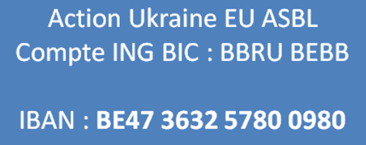
You can help us by making a donation here:
With the support of R&D, U4U, GRASPE, Femmes d’Europe
Modernisation of the EU delegation network and redundancies
The unions presented a united front to Commissioner Serafin, expressing their deep concern about the modernisation of the EU delegation network. This stems from a political decision taken in May by the EEAS and the Commission, which was announced at an information meeting on 23 May. This decision was made without any social consultation, despite having significant consequences for over 3,500 Commission employees in 145 delegations and offices worldwide.

Note for the attention of
Mr Piotr Serafin, Commissioner for Budget, Anti-Fraud and Public Administration
Subject: Request for Social Dialogue on the Modernisation of EU
Delegations and a suspension of the proposed mass dismissals of
Local Agents in the Western Balkans.
We express our deep concern over the implementation of the modernisation of the EU Delegation Network resulting from a political decision between the EEAS and the Commission that was taken in May and subsequently announced in an information meeting on 23rd May.
As a matter of urgency, we must underline that staff representatives and representative trade unions were not convened to any social dialogue meetings prior to the political decision on the restructuring which has far-reaching implications for over 3500 Commission staff serving in 145 Delegations and offices across the globe.
Despite repeated assurances that any reform would be progressive over the next few years and that dismissals would be avoided through the non-publication of vacant posts and/or the non-replacement of retired staff together with redeployment measures, we are now confronted by a Commission proposal to summarily dismiss up to 29 staff members in the Western Balkans within a matter of weeks. In certain Delegations cuts to the Finance, Contracts and Audit Sections, represent up to 65% of current Local Agents and is therefore considered a substantive reduction that requires a robust social dialogue mechanism that ensures transparency and fair treatment.
We remind you that when the Commission proposesto dismiss well-performing and long-serving staff due to a reorganisation, it must still follow a fair and reasonable redundancy process. This necessitates having a genuine rationale for the restructuring and a clear explanation of why certain roles are affected. The Commission must be transparent about the reasons and provide Trade Unions with full information about the proposed changes prior to any decisions.
Furthermore, before any dismissal takes effect, the Commission must make genuine efforts to find suitable alternative roles within EU Delegations and provide staff with the opportunity to appeal any such decision. The aim must be to avoid or minimize forced redundancies as much as possible by offering an attractive package, both financially and in terms of support, for voluntary departures.
In light of the above concerns, we request the initiation of a genuine social dialogue process and the suspension of any dismissals until further notice. It is imperative to develop a social plan that respects staff members who have dedicated their professional lives to serving our institution and deserve a dignified process.
Copy: Ms Ursula von der Leyen, President
Mr Björn Seibert, Head of Cabinet of the President
Mr Grzegorz Radziejewski, Head of Cabinet; Ms Ana Carrero
Yubero, Member of the Cabinet Serafin
Mr Stephen Quest, Chief Executive; Mr Christian Roques,
Deputy Chief Executive Officer;
Mr Christian Linder, HR Director; Mr Laurent Duluc, Head
HR. F4 Unit Deputy Head – DG HR Commission and
Executive Agencies
25/11/2025
Book review: ‘Augmented Taylorism’ by Juan Sebastian Carbonell
Promises of artificial intelligence (AI) and their effects on work

In his book “Un taylorisme augmenté” (Augmented Taylorism), Juan Sebastián Carbonell questions the promises of artificial intelligence (AI) and their effects on work, adopting a technocritical stance. In contrast to the prevalent narrative portraying AI as an unavoidable and potentially liberating technological revolution, the author provides an analysis that centres on the social, political, and economic contexts in which this technology is embedded. He begins with the clear assertion that technologies are never neutral; they bear the mark of the power relationships that shape and guide their deployment. Rather than developing autonomously, AI appears to be a product of capitalism seeking to consolidate its grip on the organisation of work.
The book is guided by the simple yet pivotal question of whether AI should be considered primarily as a threat to employment or as a means of transforming work and its conditions. Rejecting the technological determinism that fuels technophilic optimism and catastrophic fears, Carbonell proposes shifting the debate. In his view, AI does not primarily lead to jobs disappearing, but to a deterioration in job quality. Rather than being freed from monotonous tasks to devote themselves to more creative activities, workers are often dispossessed of their professional skills and reduced to performing control, execution or correction functions.
To support this thesis, the author proceeds in three stages. First, he points out that AI is less of a scientific revolution and more of a constructed social object. This is marked by struggles over definition, cycles of enthusiasm and disillusionment, and media and industrial strategies aimed at creating favourable hype for its deployment. Secondly, he demonstrates that AI extends and intensifies the Taylorist logic of the division, standardisation and control of work, which is now affecting even skilled professions such as journalism and translation. Finally, he describes the rise of algorithmic management as a new form of capitalist control that organises, evaluates and disciplines workers through the collection and large-scale processing of data.
Through this analysis, Carbonell invites us to move beyond the superficial ethical debate surrounding AI and ask fundamental political questions: should certain technologies be deployed? Who decides how they are used? What social purposes should they serve? In this sense, Augmented Taylorism is as much an investigation into the current state of work as it is a call to repoliticise technological issues. In the form of a manifesto, its conclusion argues for a Luddite revival — not the irrational destruction of machines, but the democratic reappropriation of innovation so that technological choices serve to emancipate workers rather than dispossess them.
I. The creation of the technological myth of AI
One of the book’s key contributions is its placement of artificial intelligence within a genealogy of promises and disillusionment. Carbonell emphasises the performative nature of the discourse surrounding AI since its inception.
As early as the 1950s, at the founding workshop in Dartmouth in 1956, AI emerged as a fragmented field contested by various disciplines, including mathematics, neuroscience, psychology and linguistics, and lacking a unified definition. From the outset, two paradigms clashed: symbolic AI, which focused on the manipulation of symbols and logical rules, and connectionist AI, which was inspired by the way the brain functions. These struggles were not part of an objective search for scientific truth; rather, they reflected the power dynamics within the academic field, where access to funding and recognition depended on the ability to impose one’s own paradigm.
The history of AI is characterised by cycles of enthusiasm and ‘winters’: each period of exaggerated promises is followed by a period of disappointment and withdrawal of funding. The US military, through DARPA, played a pivotal role in these cycles, particularly during the Cold War. In the 1980s, expert systems emerged in an attempt to formalise costly knowledge in order to reproduce it more cheaply. However, their failure led to another “winter”. A revival occurred in the 2010s with the advent of deep learning, fuelled by the vast availability of data. This was followed by generative AI from 2017 onwards.
Carbonell emphasises that what matters is not so much the scientific validity of each approach, but rather the role of technological expectations. These expectations guide research, unlock funding and establish social legitimacy. In this sense, AI is always the product of collaboration between scientists, industry, governments, and the media.
Media coverage plays a decisive role in portraying AI as an inevitable revolution while obscuring its limitations and harmful social effects. ChatGPT is a case in point: despite its obvious flaws during initial demonstrations, its success was assured by a powerful marketing campaign. Dependent on attention and often directly funded by companies, the media actively participates in the construction of this technological myth.
Finally, Carbonell criticises the growing discourse around ‘ethical AI’ and the resulting regulatory efforts. Rather than curbing the expansion of AI, these initiatives often serve to legitimise it, creating the false impression that the risks are under control. Artificial dilemmas (such as the trolley problem) mask fundamental political issues: should certain technologies really be deployed regardless of their technical feasibility? The author advocates a deflationary approach that considers not only what is technically possible, but also what is socially desirable.
II. AI and work: moving beyond the fear of job losses
One of the book’s central themes is its criticism of the focus on job losses. For Carbonell, the real issues are the qualitative transformation of work and the deterioration of employment conditions.
Two main approaches dominate the literature on ‘AI and work’.
The first argues that AI increases the need for skills, mainly threatening unskilled jobs.
The second highlights polarisation: automation would primarily eliminate intermediate jobs, leaving highly skilled roles and non-routine low-skilled roles intact.
These approaches are based on the theory of routine-biased technological change (RBTC), which categorises tasks according to their degree of routine and whether they are manual or cognitive. From this perspective, AI appears to be an enhanced technology, capable of automating an increasing number of tasks, particularly cognitive ones.
While Carbonell acknowledges the value of these approaches, he also highlights their limitations. They tend to overestimate the ability of technologies to replace certain tasks and neglect the importance of tacit knowledge, practical adjustments, and institutional contexts. The implementation of a technology depends not only on its technical feasibility, but also on factors such as the presence of trade unions, wage policy and labour regulations. Therefore, the same technology will have different effects depending on the environment.
Here, the author proposes an alternative. Rather than being a factor of qualification or polarisation, AI is an instrument of augmented Taylorism. To understand this argument, we must revisit the principles of Taylorism as set out by Braverman:
1- Dissociation of the work process from the skills of the worker:
In Taylorism, a worker’s practical know-how, or ‘art’ of the trade, is gradually removed from their work. Their gestures, rhythms and methods are observed, analysed and formalised by engineers. This transformation of knowledge turns the worker into a mere executor of a process they no longer understand.
2- Separation of design and execution:
Work planning and design are now the responsibility of a management body or methods office, with workers simply carrying out instructions defined elsewhere. This division of intellectual and manual labour signifies a loss of autonomy for the producer in favour of the organisation.
3- Management control of the work process:
The hierarchy enforces strict monitoring of activity through time measurement, standardisation of movements, and constant surveillance. Management becomes a technique of rational domination aimed at optimising productivity while limiting workers’ initiative.
The division of labour deprives workers of their knowledge and autonomy, making the workforce interchangeable. Digital technology and AI are extending this process by codifying movements in ever greater detail, standardising activities that were previously considered skilled and strengthening management’s supervisory power.
III. Case studies of skilled professions facing mechanised dispossession
To support his analysis, Carbonell examines several areas in which AI is having a profound transformative effect on skilled professions.
He begins by recalling expert systems such as MYCIN in the medical field, which aimed to replicate specialist reasoning. Although human experts retained a validation role, their activity was reduced to simply evaluating a protocol generated by the machine.
With generative AI, this logic is intensifying. These systems rely heavily on data produced by workers, such as articles, works and research, which are often used without remuneration. The partnership between OpenAI and newspapers such as Le Monde is an example of this. While generative AI can lighten certain routine tasks, it often increases the overall workload as the output must be corrected, verified and edited. Above all, it tends to deprive workers of their core creative role, reducing them to control and correction functions. Journalism is a prime example: the core activity of writing articles is being replaced by verifying generated texts.
Translation is another striking example. While the industry presents machine translation as revolutionary, in reality it leads to a loss of skills: post-editing is less well paid and more tedious, and it removes the creative dimension from translators’ work. Rather than polarising the profession between technical and literary translation, automation is worsening working conditions across the entire sector. Translator collectives such as En chair et en os are therefore opposed to the systematic use of AI in translation.
These examples demonstrate that generative AI neither frees up skilled labour nor increases its value, but rather increases its control and standardisation.
IV. Algorithmic management: a new form of leadership
Carbonell then turns his attention to the increasing prevalence of algorithmic control within companies.
These algorithms are becoming veritable ‘digital bosses’. They perform the three classic management functions of directing, evaluating and disciplining. They organise work, measure performance, and assign rewards or penalties. The large-scale collection of data (e.g. working time, productivity and travel) enables constant monitoring, which is often more detailed than that of human supervisors.
In certain sectors, such as logistics, lorry drivers are having their autonomy reduced by GPS tracking and biometric indicators. For example, they could previously stop when they were tired, but now data overrides their judgement. Customer ratings used on platforms reinforce these dynamics by introducing uncontrolled discrimination.
Algorithmic management not only streamlines the organisation, but also alters power relations by creating an asymmetry of information, which translates into an asymmetry of power. Employers can even absolve themselves of responsibility in the event of an incident by invoking the complexity of the algorithmic system. Carbonell refers to this as ‘dispersion of responsibility’.
However, these systems have their limitations. In some countries, such as Germany, they require the approval of works councils for deployment. Furthermore, all forms of control eventually encounter resistance from workers and trade unions. AI is therefore part of a continuum: following direct, technical and bureaucratic control comes algorithmic control, which is also open to contestation.
Conclusion
In Un taylorisme augmenté, Juan Sebastián Carbonell provides a critical analysis of artificial intelligence, challenging the prevalent ‘technological revolution’ narrative. Taking a historical, sociological and political approach, he shows that AI is neither a neutral innovation nor a radical departure from the past, but rather the latest stage in the ongoing intensification of labour control by capital. By emphasising the qualitative effects of AI on employment, such as loss of autonomy, deskilling and dispossession of professional skills, the author shifts the focus. It is not so much the existence of employment that is threatened, but rather its meaning, value and conditions.
The book also illustrates how technological discourse and expectations influence the development of AI. Cycles of enthusiasm and disillusionment, media campaigns and the instrumentalisation of ‘ethical AI’ all present this technology as inevitable and obscure its social and political dimensions. This discursive framing helps to disarm resistance by presenting industrial and political choices as pseudo-technical necessities.
In this sense, Carbonell’s analysis goes beyond critical observation to offer a political perspective. The idea of a ‘Luddite revival’ encourages us to reconsider the history of workers’ resistance and apply its lessons to the present day. As the author reminds us, Luddism was not an irrational rejection of progress, but rather a strategy aimed at defending workers’ control over the organisation of work. Similarly, current struggles against algorithmic surveillance, the standardisation of creative professions, and the de-skilling of skilled trades demonstrate the potential for collective resistance.
The real alternative proposed is therefore democratic control over technological innovation. By challenging the private ownership of digital giants and asserting the right of workers and citizens to define the legitimate uses of AI, it becomes possible to envisage alternative trajectories: an AI that is oriented towards social justice, emancipation, and knowledge sharing rather than profit maximisation and dispossession.
Thus, Augmented Taylorism is not merely a critical essay on artificial intelligence; it is also an invitation to repoliticise the technological question, considering the possibility of collective and democratic choices beyond the discourse on the inevitability of progress. AI is not just a simple tool; it is a field of struggle where the future of work, and more broadly the type of society we want to build, is at stake.
What impact will AI have on public sector jobs worldwide?

A critical reading of the Roland Berger study
The emergence of generative artificial intelligence is having a disruptive effect on all areas of human activity. While the initial public debate focused on its economic, productive, and cultural effects, the impact of generative AI on public services and the jobs they comprise has become a central issue. In a study published in September 2025, Roland Berger presents a global overview of public sector roles that are likely to be transformed by this new generation of artificial intelligence.
This study uses a detailed analytical methodology to assess the degree to which each public sector job is exposed to automation and ‘augmentation’ by AI. Taking an optimistic view of the effects of this transformation, it emphasises efficiency gains and opportunities for innovation rather than social, ethical, or democratic risks.
This note aims to present the study’s main findings, provide a critical perspective on them, and discuss the implications of these transformations for public administrations worldwide.
I. A global typology of public sector roles and their exposure to generative AI.
1. A quantified and structured overview of the public sector
The Roland Berger study identifies four main types of public sector job worldwide, which together represent around 250 million people:
- Administration (100 million jobs);
- Education (85 million jobs);
- Healthcare (38 million jobs);
- Security (approximately 30 million jobs, including 20 million military personnel and 10 million police officers).
According to the firm’s estimates, 36% of jobs in the global public sector — approximately 125 million — are ‘exposed to significant change’. This exposure takes two main forms:
Automation involves certain tasks (or even entire jobs) being performed by AI systems without human intervention.
Augmentation, in which public servants continue to play an active role but are assisted, guided or partially replaced by AI tools in their daily tasks.
2. A methodological approach based on task granularity
To assess this exposure, the authors adopted the International Standard Classification of Occupations (ISCO), a method developed by the International Labour Organisation (ILO). Each job is broken down into a series of tasks, each of which is assigned an AI exposure score on a scale of 0 to 1.
Very low exposure corresponds to a score below 0.25, low exposure to a score between 0.25 and 0.5, medium exposure to a score between 0.5 and 0.75, and high exposure to a score above 0.75.
With an average global exposure score of 0.35, around one-third of public sector jobs could be affected by the widespread adoption of generative AI tools in the medium term.
II. The two drivers of transformation are automation and augmentation
1. Automation: the risk of technological substitution
The study estimates that 7.5% of jobs in the global public sector (around 23 million) could be fully automated. These are primarily office and administrative support roles, including secretaries, receptionists, call centre agents, postal service employees, management assistants, and data entry clerks.
These roles involve highly standardised tasks such as recording and retrieving information, managing appointments, processing administrative requests and answering calls.
Generative AI’s mastery of natural language now enables these tasks to be carried out directly, without the need for specific human skills.
2. ‘Augmentation’: moving towards new, AI-assisted ways of working
The most widespread and significant impact relates to job augmentation, i.e. the transformation of professional practices through the integration of AI tools without the direct elimination of jobs.
According to the study, 21.8% of public sector jobs (77 million positions) could be reshaped in this way.
The most striking examples are:
- Teachers, whose peripheral tasks (such as lesson preparation, marking and administrative follow-up) could be taken over by AI;
- Doctors and nurses could be assisted in diagnosis, prescription and therapeutic follow-up;
- Tax and customs officials could be assisted in detecting fraud and analysing regulations;
- lawyers and regulatory experts, whose analytical functions will be partially outsourced to language processing models.
Although these changes promise to save time and increase efficiency, they also raise important questions. For example, who is responsible if an error occurs? And what human expertise remains to be defended when tasks are carried out by machines?
III. Marked sectoral differences
1. A first group undergoing profound change
The fields of health, social services, security, education and administration, which are in direct contact with citizens, are identified as being the most exposed.
In these sectors, the study refers to the emergence of ‘augmented agents’: doctors, teachers and police officers whose analytical and decision-making capabilities are enhanced by AI systems.
However, some applications raise significant ethical concerns. “Predictive security”, for example, involves anticipating criminal behaviour based on big data and is reminiscent of algorithmic surveillance, which could potentially violate democratic principles and civil liberties.
2. Relatively unaffected sectors
At first glance, the defence, culture and public finance sectors appear to be less directly affected. However, the study mentions a medium-term impact:
- in defence, this will be seen in threat simulation and automated warfare;
- in culture, through the rise of computer-assisted creation;
- in finance, through the rationalisation of control and auditing.
3. Sectors with a high manual component
According to Roland Berger, activities requiring a physical presence, such as agriculture, construction, public transport, maintenance and waste collection, are not particularly susceptible to generative AI in the short term.
However, these activities could evolve through the use of robotics, smart sensors and data analysis (for example, in waste management or precision agriculture).
IV. A critical reading: between technological optimism and social blind spots
The study generally views the digital transition in the public sector positively. It paints a picture of a more efficient, responsive and better-equipped administration.
However, this approach raises several questions.
Firstly, the authors have an almost implicit trust in technical solutions without questioning their biases, dependence on digital infrastructure or energy costs, which is a technocentric vision.
Secondly, the idea that freed-up agents will be able to refocus on ‘higher value-added’ tasks is hypothetical, particularly in administrations subject to budgetary constraints.
There has been little consideration of the social and political effects:
- the possible distortion of the meaning of public service;
- the loss of human contact in relations with citizens;
- the concentration of decision-making power in the hands of those who design or configure the algorithms.
Ultimately, it seems that the training and digital literacy of civil servants is the key differentiating factor. Without substantial support, the technological divide could exacerbate existing social disparities.
V. Roland Berger’s recommendations: balancing modernisation and supervision
The study concludes with five action areas designed to support this change:
- Invest in infrastructure and data: develop accessible, reliable and interoperable information bases, which are essential for public AI.
- Encourage local innovation by enabling agents and services to design their own use cases rather than imposing top-down solutions.
- Provide extensive training: make continuous training and digital skills development a pillar of the transformation.
- Support citizens by informing and educating the general public about the uses of AI, to avoid mistrust and digital exclusion.
- Provide legal and ethical guidance by defining a trust framework that guarantees algorithm transparency, decision accountability and data protection.
It is striking that, although this last point is central in the public context, it comes only at the end of the chain. This suggests that the question of AI governance remains subordinate to that of its deployment.
Conclusion
The Roland Berger study provides a comprehensive overview of the impact of generative artificial intelligence on public sector jobs. The study’s main focus is on quantifying the overall impact of AI on public sector jobs and highlighting sectoral disparities.
However, beyond this forward-looking exercise, the study also reveals a worrying trend: The construction of a discourse of modernisation that prioritises technological efficiency over reflection on the meaning of public service, the value of human connection, and the democratic governance of algorithms..
Therefore, the challenge lies not only in determining how many jobs will be transformed, but also in understanding how and for what purpose this transformation will occur.
In other words, the fundamental question remains: What kind of public intelligence do we want? Do we want artificial intelligence to serve civil servants and citizens, or do we want an administration that is automated, streamlined and perhaps dehumanised?
A new automatic billing system has been introduced to simplify healthcare for EU staff in Luxembourg

EU staff in Luxembourg can look forward to a significant reduction in healthcare paperwork following a new administrative agreement signed last week between the PMO (Office for the Administration and Payment of Individual Entitlements) and the Federation of Luxembourgish Hospitals (FHL).
The first tangible result of this agreement was the introduction of an automatic direct billing system for hospital care on 1 October 2025 in several large hospitals, including the Robert Schuman Hospital (HRS) and the Centre Hospitalier de Luxembourg (CHL). Other hospitals are expected to join the scheme in the coming months.
Relief from Administrative Burden
The measure is part of a high-level, interinstitutional initiative launched in 2020 to enhance the attractiveness of Luxembourg as an institutional seat for the EU.
In practice, JSIS (Joint Sickness Insurance Scheme) affiliates with primary coverage can generate a specific JSIS cover certificate for hospitalisation, childbirth, or major outpatient treatments. By presenting this certificate upon admission, the hospital will send invoices for the relevant services directly to the PMO for payment. Any remaining amount owed by the staff member will be offset against future JSIS reimbursements or deducted from their salary. Initially, the system covers inpatient treatments and specific high-cost outpatient procedures.
Union Action for Attractivenes
The introduction of direct billing addresses a long-standing issue raised by staff representatives. U4U has long advocated for action on the high costs in Luxembourg, noting that high medical invoices add a financial strain on staff already burdened by the country’s notoriously high housing costs.
The push for a more attractive workplace has already seen success with the recently introduced Luxembourg housing allowance, which was a key outcome of the interinstitutional efforts. Staff now hope that the resolution of medical billing issues will further improve the overall appeal of working at the Commission in Luxembourg. However, this simplification of paperwork will not solve the issue of high medical costs, as healthcare prices in Luxembourg remain high; it is merely a crucial first step.
Open letter: Celebrating the 30th anniversary of 16 days of activism and the international day for the elimination of violence against women

In this open letter, the USHU-U4U member group took the opportunity of the new edition of the 16 Days of Activism to pay tribute to all the women, girls and colleagues around the world, including those at headquarters, who actively contribute to the promotion of eliminating all forms of violence against women.
Dear Colleagues of USHU/U4U,
We would like to seize the occasion of this year 16 days of activism to pay a tribute to all women and girls and colleagues who all over around the world and in HQ are actively contributing to advocate for the elimination of all forms of violence against women.
This year is also an important year as it marks the 30th anniversary of the Beijing Declaration and Platform for Action, one of the most progressive international agreements on women’s rights to date which has set up a real process of change advocating for an advancement in women’s rights.
While significant progress has been made over the last 30 years with strengthened laws, services and prevention strategies, the world is failing to eliminate violence against women which persists at alarming rates across the world with 1 in 3 women experiencing violence across their lifetimes; 86% of women and girls are living in countries without robust legal protection from violence and discrimination; Only 5% of official development assistance on GBV, on average, is being allocated to civil society organizations in developing countries.[1] Deeply entrenched stereotypes, harmful social norms, weak implementation of laws, and inadequate resources, are impeding progress.
Within the European Union several important steps forward have been taken in the past few years. The Directive 2025/1385 is an important milestone criminalising various forms of violence against women both online and offline across the EU. It also requires member states to implement stronger measures for prevention, victim protection and support, access to justice, and inter-authority cooperation. The EU accession to the Istanbul Convention in October 2023 now bounds our organization by its standards on preventing and combating violence against women. The EU network on prevention on gender-based violence established in 2023 is an important platform serving to exchange with EU Member States and stakeholder on knowledge and best practices on violence prevention; the Synergy Network Conference provides a platform for learning and sharing experiences across Europe to build violence-free societies. A reflection for the future should be carried out on how to integrate/exchange synergies between initiatives at EU level and the external dimension which for the time being continue remaining two distinct realities.
One idea would be exchanging of experiences between the funded actions under the programme Citizens, Equality, Rights and Values which provides funding to organisations working to combat gender-based violence within the EU projects/programmes of similar nature funded under the external dimension.
More into the detail of the EU external dimension[2] action in support to the elimination of violence against women it is important to flag the work carried out by our colleagues in Delegation in the preparation and update of the Gender Action Plans and the of Implementation Country Level Implementation Plans (CLIPs) under the Gender Action Plan III (GAP III). A 2023 evaluation of the GAP confirms the EU’s commitment to integrating gender equality into its external actions, notes a significant financial commitment to gender equality, and discusses progress on topics like women’s economic empowerment and women, peace, and security.
More could be done by Headquarters in terms of communicating and presenting consolidated and aggregate figures/information on the EU impact on the ground via those actions. The richness of information via the work done by EU staff on the ground provides valuable material to be better used to communicate to the public.
In terms of strategic actions the European Commissioner for International Partnerships Jozef Síkela while in New-York in September 2025 to attend the 80th session of the United Nations General Assembly (UNGA) announced a number of important initiatives that the EU shall support[3] amongst which the Spotlight Initiative Africa Regional Programme 2.0[4] in partnership with the UN aiming to end all forms of violence against women and girls and at strengthening local women’s rights organisation in Africa in line with the African Union’s Agenda 2063. The EU played a pivotal role as a partner in Spotlight Initiative’s first phase with more that 550 million contribution and remains Spotlight Initiative’s largest donor in the Initiative’s second phase. The Spotlight initiative in collaboration with the UN Trust Fund created the SHINE hub[5] an online platform for online platform for sharing knowledge on ending violence against women.
The Advocacy, Coalition Building and Transformative Feminist Action (ACT) programme[6], is a game-changing commitment between the European Commission and UN Women as co-leaders of the Action Coalition on Gender Based Violence (GBV) launched in 2024. This program aims to strengthen the capacity of civil society and women’s rights organizations for global advocacy.
The EU is also active in the Call-to-Action on protection from Gender-Based Violence in Emergencies[7] since 2013. The initiative focuses on accountability and action to prevent gender-based violence during crises. In addition,the EU’s humanitarian aid budget supports targeted actions to prevent and respond to gender-based violence in crisis situations around the world.
Finally the EU involvement in the Peace and Security Agenda against gender-based violence[8] which promotes women’s equal participation in peace processes and the protection of women and girls in conflict.
All the above information provides an indication that the EU now more than ever has an opportunity to play an active role both at the EU and at the international level. The preparation of a new internal and external Gender Equality Strategy for 2026-2030, building on the existing 2020-2025 strategy is an opportunity to advocate for more synergies between the internal and external dimension of the EU action in this area. We as Trade Unions support a more active involvement of EU Delegations colleagues and Headquarters especially in the forthcoming implementation of the “Roadmap for Women’s Rights”[9] adopted in March 2025 to guide this process and outline a long-term vision.
The EU’s new Gender Equality Strategy 2026-2030 will be judged not by the promises it makes, but by what it delivers for the women and men in all their diversity in Europe and in the EU external dimension.
We would like to recall the main points of this roadmap focusing on: freedom from gender-based violence, the highest standards of health, equal pay and economic empowerment, work-life balance and care, Equal employment opportunities and adequate working conditions, quality and inclusive education, political participation and equal representation, institutional mechanisms that deliver on women’s rights and development of GAP IV. For GAP IV in particular building on the outcomes and lessons learned from GAP III, and develop a Gender Action Plan IV (GAP IV) to cover the period after 2027. The specific details and adoption timeline for GAP IV are still in development, with input being gathered from Member States and civil society organizations.
We are strongly advocating for a full inclusion of civil society representatives in all the steps of the process. As one of the pillars of this process is to lead by example it is of utmost importance to consider that Trade Unions within EEAS and the Commission have and will continue to strongly advocate for gender mainstreaming and equal representation in all the activities. More precisely there is the need to support the economic and social independence of vulnerable categories and encourage their inclusion in the social texture. It is also important to advocate for more inclusion of people with disabilities in the decision-making processes so to create more inclusive environment.
Gender mainstreaming is certainly key to achieve this but it is also of paramount importance to support more targeted programmes such as Spotlight 2.0 but also more targeted country actions to better meet the needs of the local communities and ensure a more active role and involvement form civil society organisations operating at the grass root level.
This is what shall ensure an operationalization of the different strand of work and a connection to the target group. We would like to mention that the need to involve more actively civil society organisations has been raised by UN Women; the UN lead entity with the mandate to advance women’s rights, gender equality, and the empowerment of all women and girls; in a survey published published in October which indicates that sweeping aid cuts are dismantling the organizations working in this field. The result is that more women at risk of suffering violence with services diminished and advocacy silenced. [10]
The strategic overall approach helps also to contextualize the theme of this year’s campaign “UNiTE to End Digital Violence against All Women and Girls (VAWG)” Rapid technological change is creating new risks and intensifying violence against women and girls across the online-offline continuum. Digital technologies have enabled new forms and patterns of VAWG, including image-based abuse, deepfake pornography, gendered disinformation amongst others. The most recent case was witnessed this summer in Italy where a website showing doctored images of thousands of Italian women including Prime Minister Giorgia Meloni has closed down after a significant backlash[11]. In a concept note prepared by UN Women for the UNIT Campaign[12] it is mentioned that the rapid growth of Artificial Intelligence (AI) is intensifying VAWG in numerous ways including through the deliberate spread of targeted disinformation that reinforces and intensifies misogynist norms that justify, excuse and normalize VAWG. Generative AI has also facilitated the spread of image-based abuse and deepfake pornographic videos based on deceptive and non-consensual sexually explicit content. Despite a lack of global comparable data to understand the nature and extent of digital VAWG, available data point to the scale of the problem.
Of relevance the idea to include the adoption of the Global Digital Compact as a first comprehensive framework for digital technology and AI governance. On the EU side the Directive 2024/1385[13] targets violence against women and domestic violence, including specific cybercrimes like non-consensual sharing of intimate images, cyberstalking, cyber harassment, and incitement to hatred or violence. U4U has launched via its Journal GRASPE[14] a number of reflections/debates on AI and will certainly in partnership with USHU consider enlarging this discussion over the forthcoming months so to include VAWG.
We would like to conclude by wishing all colleagues in EU Delegations fruitful anniversary of the 16 days of activism looking forward also to gather your thoughts for echoing the great work you have been doing on this subject over the years. Thanks for contributing to make the EU a global actor # UNiTE to End Digital Violence against All Women and Girl; # UNiTE for EUROPE.
Group of USHU/U4U members
[1] ACT to End Violence against Women Programme | UN Women – Headquarters
[2] Global hub for victims of violence | EEAS
[3] At the UN General Assembly, the EU reinforces its support to global health and human rights – International Partnerships
[5] Spotlight Initiative | SHINE
[6] ACT to End Violence against Women Programme | UN Women – Headquarters
[7] Call to Action on Protection from Gender Based Violence in Emergencie
[8] Implementing the Women, Peace and Security agenda | EEAS
[9] The EU Roadmap for Women’s Rights: a renewed push for gender equality – European Commission
[10] At risk and underfunded: How funding cuts are threatening efforts to end violence against women and girls | Publications | UN Women Knowledge portal
[11] Fake images of PM Meloni and other women politicians on porn website spark outrage in Italy | Euronews
[12] unite_2025_concept_note_2-_en.pdf
[13] Cyberviolence against women: what is it and how to prevent it? | Topics | European Parliament
U4U, serving you better!

| The new year always inspires us to make new resolutions to put into practice. For 2026, U4U’s main resolution is to serve you even better. To do this, we have direct links between you and the team that can best help you. So: If you would like individual assistance, please send an email to HR-REP-PERS-U4U-ASSISTANCE-INDIVIDUELLE@ec.europa.eu If you would like information about training or coaching, please send an email to training.u4u@gmail.com If you would like to contact our colleagues in Luxembourg, please send an email torep-pers-osp-u4u-lu@ec.europa.eu – If you wish to contact colleagues at the European Parliament, please send an email to u4u@europarl.europa.eu If you would like to contact colleagues in the External Service, please send an email to u4unity@eeas.europa.eu For any other questions, please send an email to our general functional mailbox: rep-pers-osp-u4u@ec.europa.eu We invite you to visit our website regularly and join our Facebook page to stay up to date with the latest union news, including training courses, coaching sessions and workshops available, conferences/cultural walks in Brussels, and events that we organise throughout the year. You can also find more general information about our Statutes, as well as articles and reflections on topics that concern us all. |